Speical Session 5: Neurodynamic Optimization and Distributed Computing
“神经动力学优化与分布式计算”
Neurodynamic optimization is a technical solution for solving complex optimization problems by simulating the dynamic characteristics of neural networks. It has the advantages of parallel computing capabilities, real-time response characteristics, and strong robustness, and has shown significant application potential in the fields of intelligent control and multi-objective decision-making. In the face of the optimization demands of large-scale, high-dimensional, and distributed systems, single-machine computing often encounters bottlenecks in computing power and is constrained by communication delays, making it difficult to meet the requirements of complex scenarios. Through multi-node cooperation, task decomposition and resource sharing, distributed computing can break through the limitations of single point computing, and enhance the scalability and fault tolerance of the system. This topic focuses on the cross integration of neurodynamic optimization and distributed computing. On the one hand, it explores the construction method of neurodynamic model under the distributed architecture to meet the parallelization challenge of large-scale optimization. On the other hand, the communication mechanism, convergence analysis and stability guarantee strategy in distributed environment are studied to balance computational efficiency and global optimality. Its application scenarios include smart grid scheduling, collaborative optimization of traffic flow, and parameter tuning of large-scale engineering systems. This special topic aims to reveal the theoretical framework and practical path of the synergy between them, provide new methods for intelligent optimization of complex systems.
神经动力学优化是一种通过模拟神经网络的动态特性来解决复杂优化问题的技术。它具有并行计算能力强、实时响应特性好、鲁棒性强等优点,在智能控制和多目标决策等领域有着显著的应用潜力。面对大规模、高维、分布式系统的优化需求,单机计算常面临算力瓶颈与通信延迟制约,难以满足复杂场景要求。分布式计算通过多节点协同、任务分解与资源共享,可突破单点计算限制,提升系统可扩展性与容错性。本专题聚焦“神经动力学优化与分布式计算”的交叉融合,一方面探索分布式架构下神经动力学模型的构建方法;另一方面研究分布式环境中的通信机制、收敛性分析与稳定性保障策略,平衡计算效率与全局最优性。其应用场景涵盖智能电网调度、交通流协同优化、大规模工程系统参数整定等领域。本专题旨在揭示两者协同的理论框架与实践路径,为复杂系统智能优化提供新方法。
Chair: Dr. Jingxin Liu, Chongqing University of Science and Technology, China
 Jingxin Liu received a Ph.D. degree from the School of Electronic and Information Engineering, Southwest University, Chongqing, China, in 2023. He was a joint training Ph.D. student with the School of Computing, National University of Singapore, Singapore, from 2021 to 2023. He was the recipient of the Outstanding Ph.D. Thesis Award, Chongqing. He is currently with the School of Mathematics and Physics Sciences, Chongqing University of Science and Technology, Chongqing, China. He published numerous academic papers in IEEE TNNLS, IEEE TETCI, IEEE TCNS, IEEE TAI and Neural Networks journals. He also received the Science and Technology Award of China Communications and Transportation Association. He was the principal investigator of Natural Science Foundation Project of Chongqing, Science and Technology Research Program of Chongqing Municipal Education Commission, and Guangxi Science and Technology Program. His research interests include artificial intelligence, optimization, distributed computing and neural networks.
Co-chair: Prof. Hengmin Zhang, East China University of Science and Technology, China
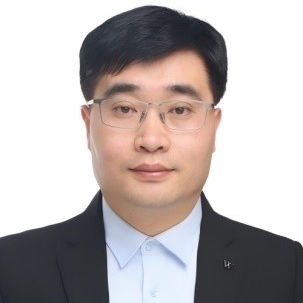 Hengmin Zhang received the PhD degree in computer science and engineering from the School of Computer Science and Engineering, Nanjing University of Science and Technology, China, in 2019. He subsequently held postdoctoral research positions with the School of Information Science and Engineering, East China University of Science and Technology, Shanghai, China, and the Department of Computer and Information Science, University of Macau. He was a research fellow with the School of Electrical and Electronic Engineering, Nanyang Technological University, Singapore. He is currently a specially appointed researcher with the School of Information Science and Engineering, East China University of Science and Technology. He has authored coauthored more than 30 technical papers in top-tier international journals and conferences. His research interests span pattern recognition, intelligent systems, data-driven science, and optimization-based learning. His research excellence has been recognized with the Outstanding Doctoral Dissertation Award from both the Chinese Institute of Electronics (CIE) and Jiangsu Province.
Paper/Abstract Submission Instructions
1. Word Template:
Formatting.doc (文章模板)
2. Paper submission link for BDAI2026 is at:
Electronic Submission System (投稿链接)
3. Full Paper (Presentation and Publication)
Accepted full paper will be invited to give the oral presentation at the conference and be published in the conference proceeding.